

Welcome to my Lifestyle Parenting Blog, where I explore topics related to chronic illnesses such as ME/CFS, chronic pain, and fibromyalgia while embracing a passion for yoga, books, and blogging.
Kinship Care Week: Celebrating the Silent Army Who Step Up for Children
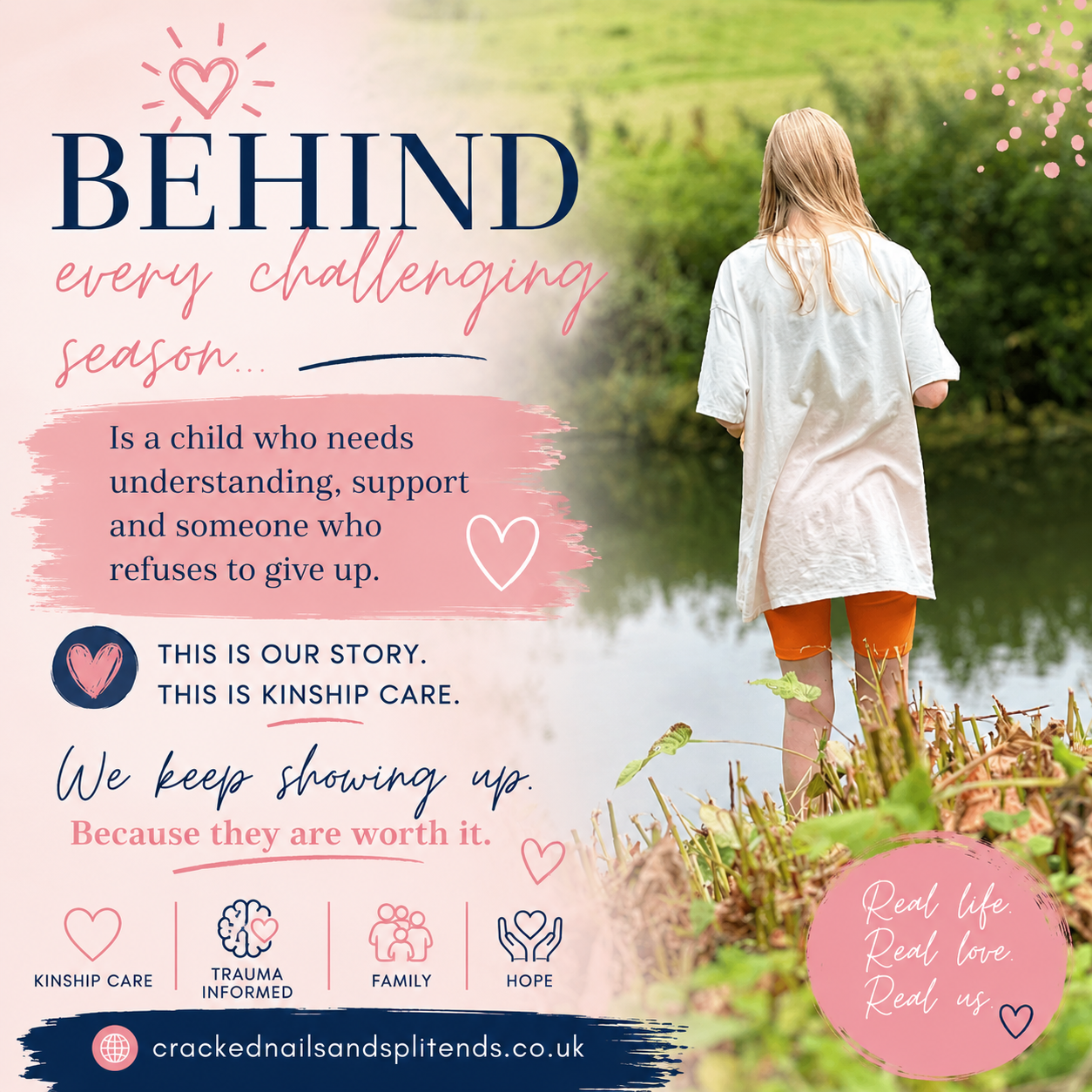
This Kinship Care Week, I’m celebrating the silent army of kinship carers who step up when a child needs them most. Often unprepared and with little support, they open their homes, reshape their lives and navigate challenges they never expected—all to give a child safety, stability and the chance to remain within their family.
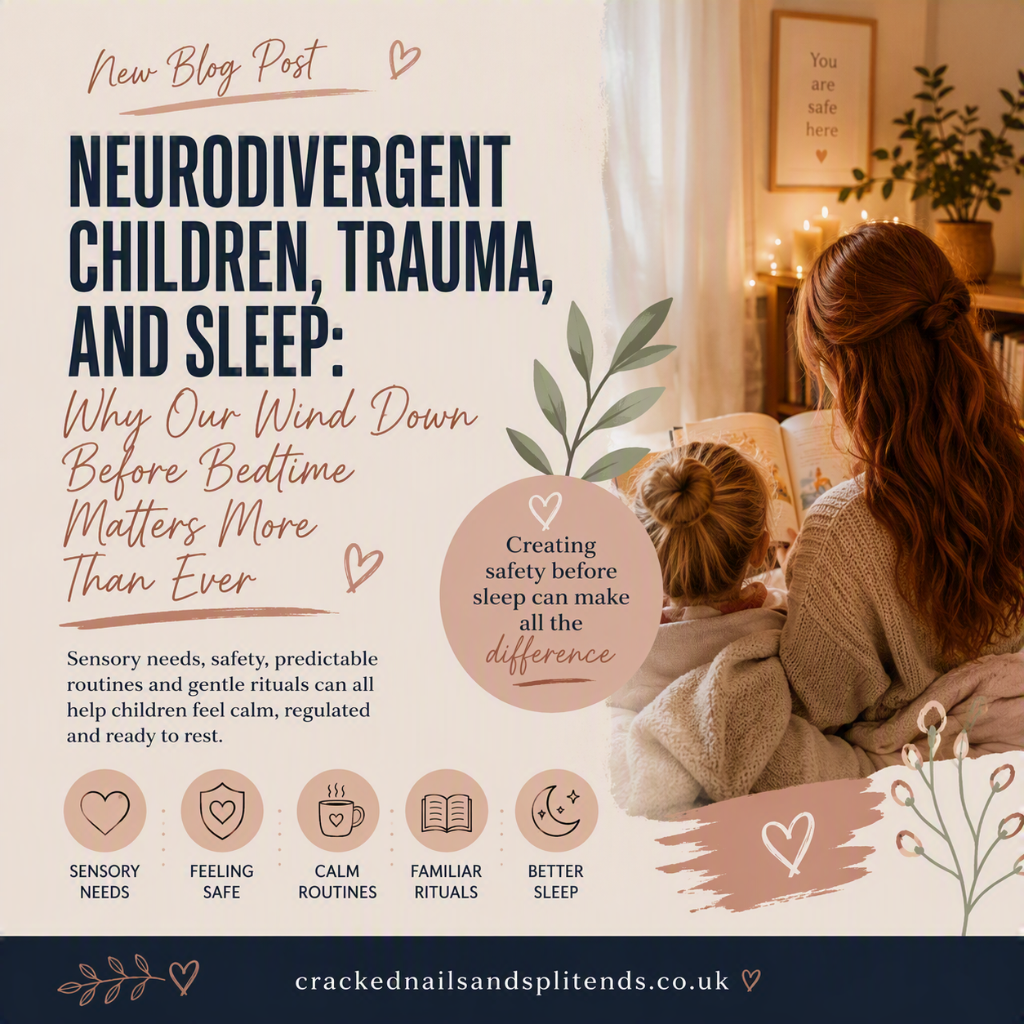
Helping Children Feel Safe Enough to Sleep: Neurodivergence, Trauma, and Bedtime Routines
Sleep is often viewed as a simple matter of tiredness, but for many neurodivergent children and those who have experienced trauma, it is far more complex. Sensory needs, feelings of safety, predictable routines, and emotional regulation can all play a significant role in helping a child settle and rest. In this article, I share the bedtime strategies our family has discovered through trial and error, and why creating a calm, secure environment before sleep can make all the difference.

The Reality of Life After a Special Guardianship Order
When people think about Special Guardianship Orders (SGOs), they often focus on the court process itself.
What many don’t realise is that once the Special Guardianship Order is granted, the support you’ve relied on throughout the assessment process can suddenly disappear.
That was certainly our experience.

Why Neurodiverse Kids Do It: Breaking Rules And Sneaking Explained
So what do you do instead? You have to change how you approach things. You have to stop seeing it as bad behaviour and start seeing it as unmet needs or developmental delay. You have to find consequences that actually make sense to their way of thinking.
Recently I tried something that actually seemed to click. My daughter had been sneaking her phone and staying up for hours and hours. We added it up and realised she had spent eighteen hours during the night that week on her device when she should have been sleeping.
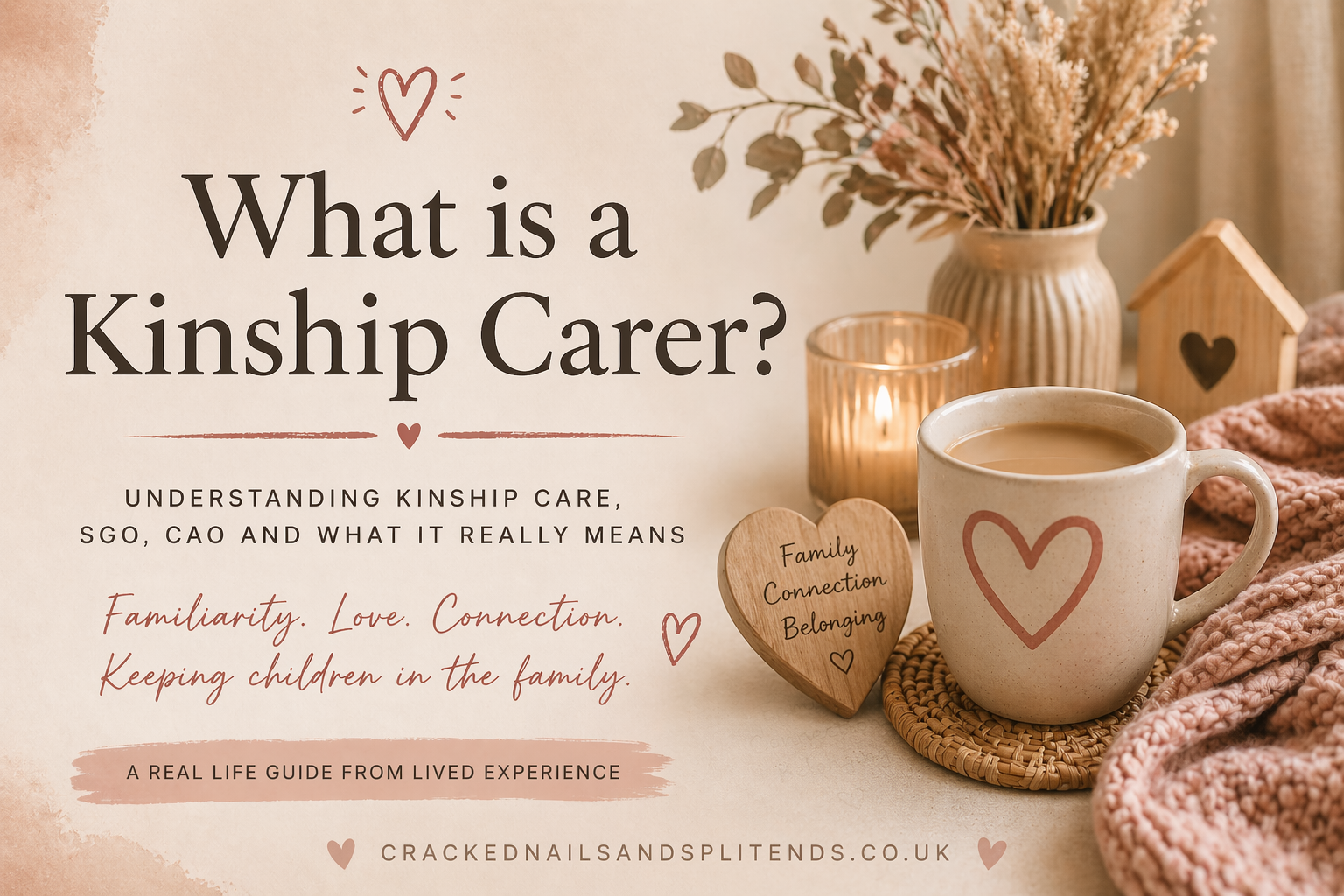
What is a Kinship Carer? Understanding Kinship Care, SGO and CAO
It’s when family or friends step in and essentially stop a child from going into the care system with strangers.
Kinship care means familiarity, love, connection and so much more. It is about keeping a child within their family network, with people they already know, trust and feel safe with.
In simple terms, a kinship carer is someone who cares for a child when their birth parents are unable to, and instead of the child entering foster care, they remain within their extended family or close relationships.

What Steps to Take When an SGO Is Failing: Real Support for Kinship Carers
There was a point where everything felt like it was slipping.
Not in a dramatic, obvious way. It was quieter than that. A slow build of pressure, behaviours escalating, school becoming harder, and home starting to feel less like a place of safety and more like a place of constant firefighting.
We had our Special Guardianship Order. On paper, we had permanence. We had done everything we were supposed to do.
But in reality, we were struggling.

Is It Stimming, OCD, or Anxiety? How I Learned to Tell the Difference as a Parent
For a long time, I thought the hardest part of parenting was learning how to respond in the moment. What I did not expect was how difficult it would be to understand what I was even responding to.
I watched my child repeat movements, phrases, rituals. I watched behaviours ramp up when they were overwhelmed, tired, excited, or under pressure. I watched them disappear into patterns that looked comforting one day and distressing the next. And I kept asking myself the same question, quietly and then out loud.

What Happens After You Get the Passport When You Have a Special Guardianship Order
When the passport finally arrived, I remember holding it in my hands and feeling something close to relief. Not excitement exactly. Relief mixed with exhaustion. If you have ever applied for a passport for a child under a Special Guardianship Order, you will understand why. It is not a simple tick box exercise. It is paperwork layered on top of court orders, parental responsibility, consent, uncertainty, and the constant fear of getting something wrong.
For a brief moment, I thought we were done. Passport sorted. Box ticked. Job finished.
But the truth is, the passport is only the beginning.

A Different Kind of Brain and the Cost of Forcing Normal
I’m watching Netflix, half watching, half thinking, which is usually how these things go. I put the Eddie Murphy documentary on because I love a good documentary. Eddie Murphy was a big deal in my house when I was growing up. My dad loved him. Not just liked him, loved him. His humour, his energy, the way he filled a room even through a screen. Some of my earliest memories are of my dad laughing at Eddie Murphy movies, properly laughing, the kind that makes you forget everything else for a moment.

Love Isn’t Enough and Time Won’t Heal Trauma
Let’s get rid of two dangerous myths that harm children far more than they help: the idea that love alone can erase trauma, and the belief that because a child is young, they will naturally grow out of it or are too young to remember. Neither of these is true. They are trauma myths adults tell themselves to feel hopeful and reassured, but they are not rooted in reality. In our case, these beliefs were reinforced by professionals, resulting in systemic gaslighting. I know this because I once believed them myself,
The Safe Place They Choose: Why Children With Trauma Fall Apart at Home
That sentence took me years to understand, and even longer to believe. At first, it sounded like something people say to soften the blow, a well-meaning cliche designed to make parents feel better when they are standing in the wreckage of yet another emotional explosion. But it is not a cliche. It is not a consolation prize. It is a truth, and a heavy one.
When your child has a meltdown at home, when they scream or sob or push every button they know you have, it feels personal. It feels deliberate.

Finding Support as an SGO or Kinship Carer
There is a moment that most special guardianship and kinship carers recognise instantly. It is the quiet realisation that life has shifted on its axis. One day you are a grandparent, aunt, uncle, older sibling or family friend. The next you are navigating school runs, trauma responses, social workers, court paperwork and a level of emotional responsibility you never planned for.

The Emotional Toll of Kinship Care
Kinship care is often spoken about like a solution. A safety net. A keeping it in the family kind of story that people can wrap up neatly in their heads. What they do not talk about enough is the emotional cost of it. The quiet, constant weight that settles into your chest when you step into a role you did not plan for but could not walk away from.

Life as a Kinship Carer: What No One Prepares You For
I wish someone had told me what life as a kinship carer really looked like before I stepped into it. They don’t. They prepare you with forms, court dates, meetings with social workers, and endless advice about what the law says you can and cannot do. What they don’t tell you is what it feels like in the quiet moments, in the chaos, in the grey areas between love and fear.

What Is a Special Guardianship Order SGO / Kinship Carer
I remember the moment the phrase Special Guardianship Order was first said to me. It was like someone had handed me a book in a language I’d never learned but was suddenly expected to speak fluently. I had lived through court hearings, adoption chats, kinship care referrals, late‑night Googling, endless forms, and the very real fear of choosing the wrong path for a child I loved with every fibre of my being. At that time, it felt like every instinct I had was whispering and screaming at the same time.
How the Adoption and Special Guardianship Support Fund (ASGSF) Saved Our SGO Placement
I want to write this because there was a moment where everything we had worked so hard for almost fell apart, and the reason it did not is because of the ASGSF programme. Without it, I am certain our SGO placement would not have survived. This is not exaggeration. This is our lived reality.

Developing Body Positivity in my Teen Daughter Who Has Childhood Trauma
As a Special Guardian (SGO) and kinship carer to my teen daughter, I have become deeply aware of how important it is to nurture a positive body image and healthy self-esteem. This is not something I ever expected to think so much about, but when a child has experienced early childhood trauma, even seemingly ordinary stages of development can feel layered and complex. My daughter’s journey has taught me that body image is not just about appearance. It is about safety, belonging, and feeling secure in who you are.

Special Guardian Child Not Doing Well in School: What I Did and What Helped
When I first realised my special guardian child was not doing well in school, I felt a mix of worry, guilt, and constant anxiety. I’m a Special Guardian to my little girl, and like many children under special guardianship, school was not a safe or supportive place for her, at least not at first.
10 Things Kinship Carers Need to Hear
When I first stepped into kinship care, I did not feel brave or capable or ready. I felt overwhelmed, frightened, and quietly unsure whether I was about to break myself trying to hold everyone else together. Kinship care often begins in crisis, and when you are in the middle of it, there is very little space for reassurance. Over time, and through many conversations with other kinship carers,
Things I Hope My Children Learned When We Became Kinship Carers / Special Guardians
When we became kinship carers, our boys were just 3, 9, and 12. Even then, I knew their lives were about to shift in ways they were far too young to fully understand. Almost overnight, our home stretched to hold more emotions, more needs, more chaos, and more love than any of us had known before. I worried constantly about what the boys would take in from all of it.