
I Knew Something Wasn't Right
I spotted it the moment he came bouncing down the school steps.
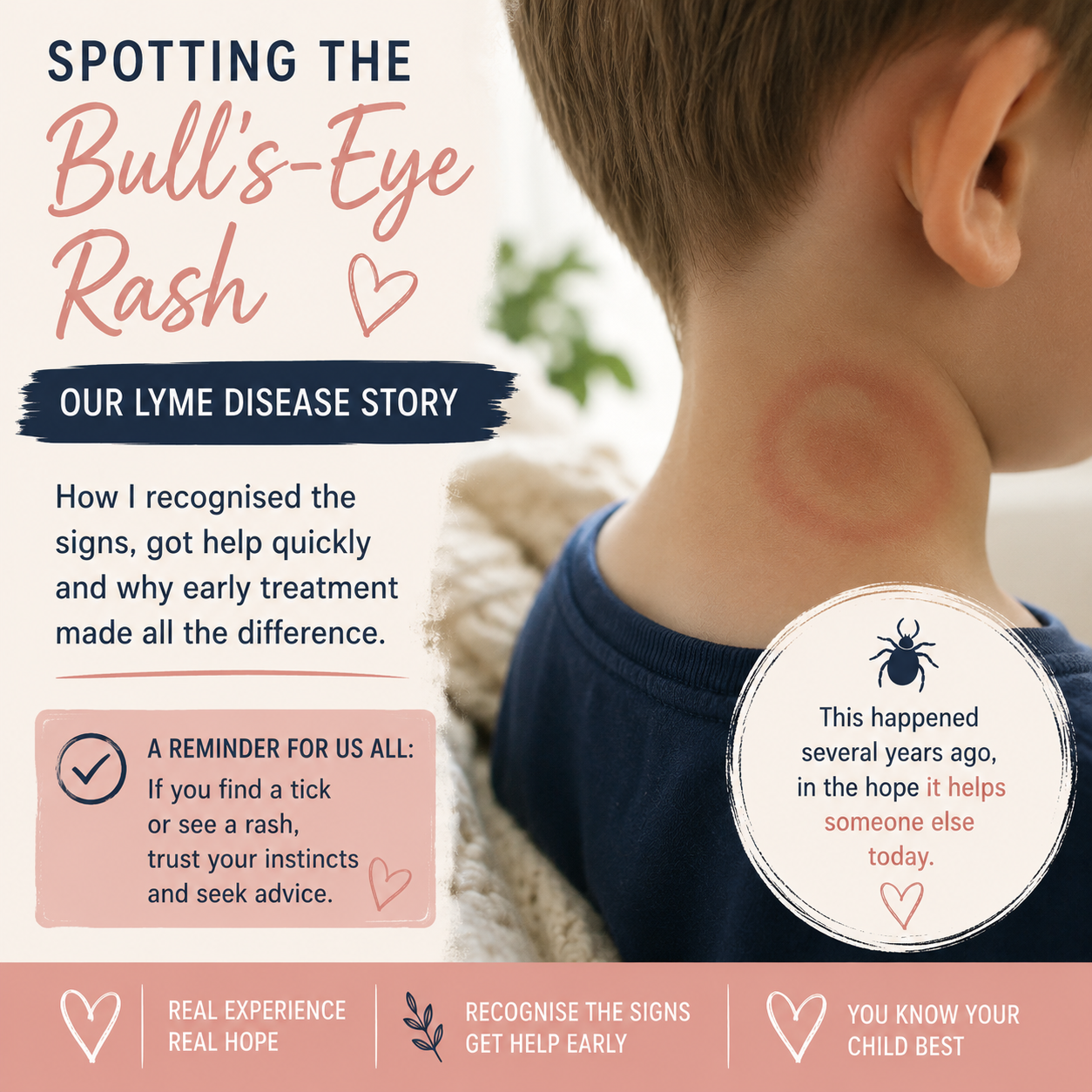
Like every other afternoon, I was waiting to collect him at the end of the school day. He had a huge smile on his face, full of energy and not a care in the world. But as soon as I saw the side of his neck, my heart sank.
There it was.
A distinctive red circular rash with a clear centre, the classic bull's-eye rash I'd recently read about.
Something immediately told me this wasn't an ordinary insect bite.
Getting a Doctor's Appointment
As soon as we got home, I phoned our GP surgery and explained that my son had what looked like a bite surrounded by a red ring.
The receptionist said a doctor would call me back.
Normally I would have expected quite a wait, but within minutes the phone rang. The doctor asked me to bring him straight to the surgery.
Usually I'd have spent that time searching the internet, trying to work out what it might be. Thankfully, I'd recently been reading about Lyme disease, so the appearance of the rash was fresh in my mind. Looking back, I'm incredibly grateful for that. It would have been easy to dismiss it as a simple insect bite and leave it to heal on its own.
The Diagnosis
After a short wait, we were called into the consultation room.
My son happily climbed onto the examination chair while I stood behind him, trying to stay calm.
The doctor took one look at the rash and immediately said it had the classic appearance of Lyme disease.
Although it wasn't what I wanted to hear, it confirmed what I'd already suspected.
He asked whether we'd recently been walking through woodland or long grass. With two beagles, we spent plenty of time outdoors, and the previous weekend we'd visited Gunton Marshes where my son had been happily rolling around in the long grass.
The doctor asked a colleague to take a look as well, and they both agreed it was very likely Lyme disease.
Starting Treatment Quickly
The doctor explained that the rash suggested the infection had been caught at an early stage, which meant it was usually very treatable with antibiotics.
My son was prescribed a three-week course and we were advised that the medication might make him feel a little unwell, although many children tolerate it perfectly well.
We also learned something important that many people don't realise:
- Not everyone with Lyme disease develops the classic bull's-eye rash.
- Not every tick carries the bacteria that causes Lyme disease.
- Early diagnosis and treatment are important to help prevent more serious illness.
Because we have dogs, the doctor also recommended checking them carefully for ticks after walks.
His Recovery
Over the following week, a few more bull's-eye rashes appeared, but thankfully he remained completely well in himself.
He continued going to school, playing as normal and never really seemed unwell.
The biggest challenge was persuading him to take what he described as the "yucky" medicine every day! Thankfully he understood how important it was to finish the full course of antibiotics.
We were extremely fortunate that it was recognised so quickly, and he made a full recovery.
What Is Lyme Disease?
Lyme disease is a bacterial infection that can be passed to humans through the bite of an infected tick.
Ticks are commonly found in areas with long grass, woodland, heathland and some parks. Having a tick bite doesn't automatically mean you'll develop Lyme disease, as many ticks are not infected.
Importantly, Lyme disease is not contagious, and you cannot catch it from another person or from your pets.
Common Symptoms of Lyme Disease
Symptoms can appear anywhere from a few days to several weeks after a tick bite and vary from person to person.
Early symptoms may include:
- A circular or expanding rash (often described as a bull's-eye rash)
- Flu-like symptoms
- Fever
- Chills
- Headache
- Fatigue
- Muscle or joint aches
- Swollen glands
Without treatment, Lyme disease can sometimes affect the joints, nervous system or heart. Symptoms vary greatly, which is why it's important to seek medical advice if you develop symptoms after a tick bite or spending time in areas where ticks are common.
Tips for Preventing Tick Bites
Although it's impossible to eliminate the risk completely, you can reduce it by:
- Staying on clearly marked paths where possible.
- Wearing long trousers when walking through long grass or woodland.
- Checking yourself, your children and your pets for ticks after spending time outdoors.
- Removing any ticks promptly using a tick removal tool or fine-tipped tweezers.
Final Thoughts
Finding that bull's-eye rash on my son's neck was frightening at the time, but I'm incredibly thankful we recognised it quickly and sought medical advice straight away.
If sharing our experience helps just one parent recognise the signs of Lyme disease sooner, then it's worth telling our story.
Disclaimer: This post shares our personal experience and should not be taken as medical advice. If you think you or your child may have Lyme disease or have been bitten by a tick and develop symptoms, seek advice from a healthcare professional as soon as possible.