
Helping Your Child Through Key Stage 2 SATs: A Parent's Honest Advice
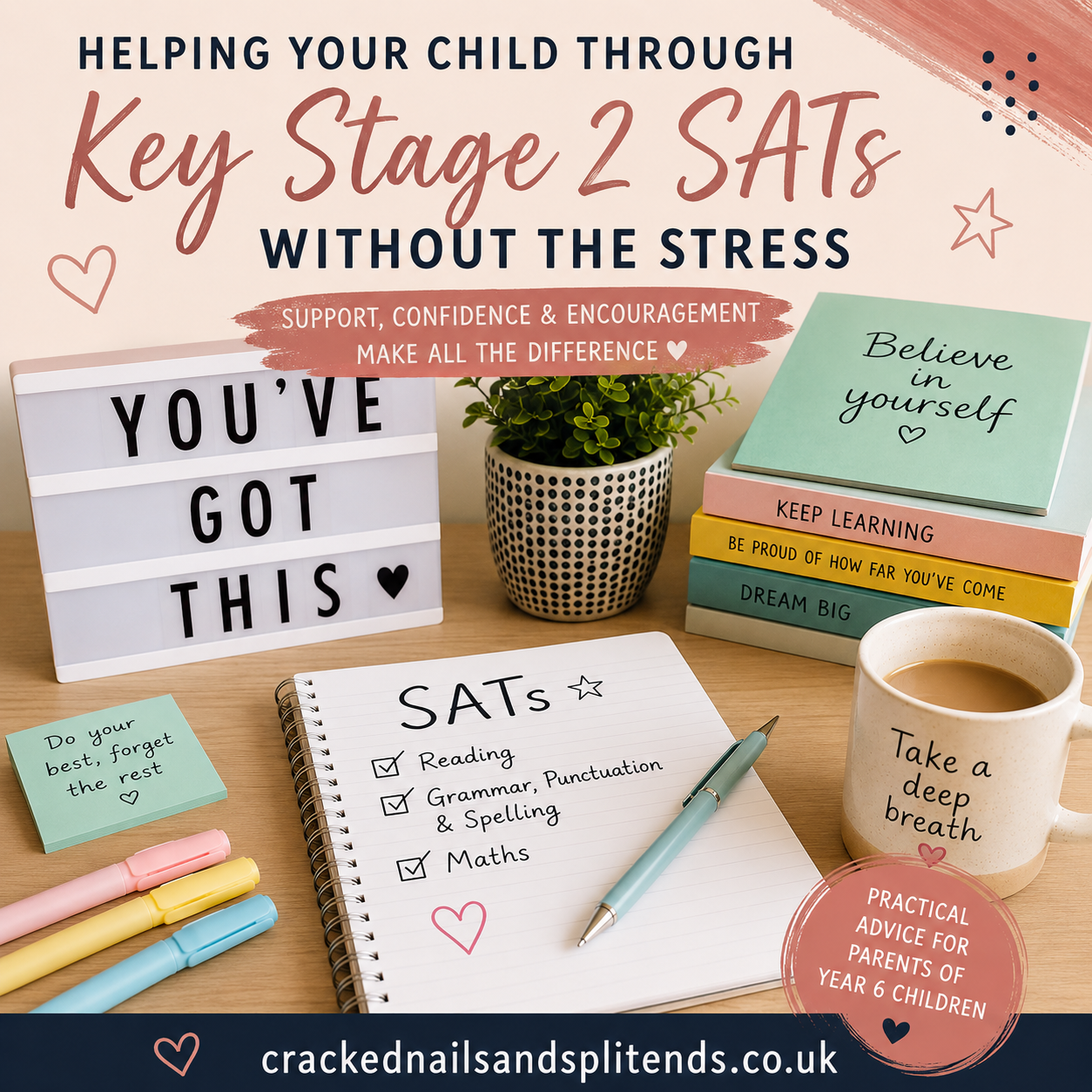
When one of my children first reached Year 6, I remember how quickly conversations started to revolve around SATs. It seemed as though every parent was asking the same questions. Had their child revised enough? Were they ready? Would the results affect which secondary school they went to?
At the time, it all felt like a huge milestone.
Looking back now, after watching all of my children move through primary school and secondary school, and most recently seeing my youngest son, Jacob, complete his GCSEs, I realise how much perspective changes with time. What once felt like one of the biggest challenges of primary school has become just one small part of a much longer educational journey.
That certainly does not mean SATs are unimportant. They help measure what children have learned during primary school and give schools useful information about progress. However, I do think we sometimes place far more pressure on them than they deserve.
If your child is approaching their Key Stage 2 SATs this year, I hope sharing my own experience will reassure you that, while preparation is important, protecting their confidence and wellbeing matters just as much.
A Little Note From Me
I first wrote about SATs back in 2014, just after Lewis had finished Year 6. Reading that post again all these years later brought back so many memories. I could remember exactly how worried I was and how much of a milestone those tests felt at the time.
Now, more than a decade later, I have the benefit of hindsight. Lewis, whose SATs inspired this post, completed his GCSEs seven years ago, and more recently my youngest son, Jacob, has just finished his own GCSEs. Looking back has given me a completely different perspective, so I wanted to revisit this post and share everything I have learned along the way.
If you are reading this because your own child is preparing for their Year 6 SATs, I hope this helps reassure you that, while they may feel enormous today, they are only one chapter in a much bigger story.
What Are Key Stage 2 SATs?
Key Stage 2 SATs are national curriculum assessments taken by children in Year 6, usually during May before they leave primary school.
The tests cover:
Reading
Grammar, punctuation and spelling
Mathematics
Writing is assessed separately by your child's teacher throughout the school year.
When Lewis was preparing for his SATs, I remember wondering whether these tests would somehow shape his future. Looking back now, I realise they are far more about measuring progress than determining it. The results help teachers understand where children are academically and can highlight areas where additional support may be helpful when they move into secondary school.
As parents, though, it is very easy to forget that.
Instead, we hear the word "tests" and immediately think about pressure, performance and expectations.
If you would like to understand more about how Key Stage 2 SATs work, including how the tests are marked and how the results are used, the UK Government has a helpful guide for parents. Read the Key Stage 2 SATs information for parents on GOV.UK.
I Think Parents Often Feel More Pressure Than Their Children
One thing I noticed was just how much pressure I put on myself.
I wanted to make sure everything was perfect. I worried whether enough revision had been done, whether enough practice papers had been completed and whether I had forgotten something important.
At least on the surface, Lewis seemed much calmer than I was.
Looking back, I think many of us parents accidentally create extra pressure because we care so deeply. We desperately want our children to succeed, but sometimes our own worries become visible without us even realising it.
Children are incredibly good at picking up on the emotions of the adults around them.
The calmer we remain, the safer and more confident they often feel.
Revision Does Not Have to Take Over Family Life
One lesson I learned was that consistency worked far better than marathon revision sessions.
Trying to squeeze hours of extra work into the evenings after school often left everyone feeling tired, frustrated and fed up.
Instead, shorter sessions felt much more manageable.
Sometimes just twenty minutes of practising maths questions, reading together or completing a comprehension exercise was more than enough.
Children spend all day learning at school, so expecting them to continue studying for several more hours every evening can quickly become overwhelming.
Keeping revision short helped maintain confidence instead of turning learning into something Lewis began to dread.
Looking back, I honestly believe our approach helped him stay positive throughout Year 6. It also helped me realise that revision is not about cramming as much information in as possible. It is about helping children feel prepared, supported and confident enough to do their best.
Confidence Is Just as Important as Knowledge
If there is one thing I have learned through raising my children, it is that confidence often matters just as much as knowledge.
A child who believes they can tackle a question is usually far more willing to give it a go than one who has already convinced themselves they are going to fail.
That confidence comes from encouragement.
We celebrated effort rather than perfection.
We praised trying difficult questions.
We reminded our children that nobody gets every answer right.
Those conversations built confidence in a way that constantly asking about scores never could.
Looking After Their Wellbeing Matters Too
As parents, it is easy to become completely focused on revision timetables and practice papers.
Sometimes we forget the simple things that help children perform at their very best.
Sleep became one of our biggest priorities.
A good night's sleep often made far more difference than squeezing in another half hour of revision.
The same was true for:
Eating a healthy breakfast.
Drinking plenty of water.
Taking regular breaks.
Spending time outdoors.
Having opportunities to relax and simply be children.
Children cannot perform at their best if they are exhausted or overwhelmed.
Every child experiences Year 6 SATs differently. Some seem completely relaxed, while others quietly carry far more worry than they ever admit.
I still remember when Lewis finished his SATs. He started the week in his usual cheerful, laid back way, and you would never have guessed he was worried. By the time Thursday arrived, though, he was completely exhausted.
Looking back, I think he had been carrying far more worry than he ever admitted. Like many children, he put on a brave face, but once the tests were over it was obvious how much energy they had taken out of him.
I was incredibly proud of him. He gave it his very best, and honestly, that is all I could ever ask. He felt fairly happy with how the tests had gone, although he mentioned there were a couple of questions he simply did not know. What pleased me most was hearing that he had finished each paper with enough time to go back through his answers, checking them carefully more than once. That told me he had stayed calm and done everything he possibly could.
Try Not to Ask About Every Test
This is something I wish I had realised sooner.
When Lewis came home after each test, my instinct was always to ask how it had gone.
Did he finish?
Were there any difficult questions?
Did he remember the answers?
Looking back, I realise he probably did not want to relive the test the moment he walked through the front door. Once a paper has been completed, there is very little that can be changed.
I gradually learned that asking, "How was your day?" or "Would you like to talk about it?" felt far gentler than immediately focusing on the test itself.
Sometimes he wanted to chat about it, and other times he was ready to leave school behind for the afternoon. Giving him that choice seemed to help far more than bombarding him with questions.
SATs Are Only One Small Part of Their Education
If there is one thing life has taught me, it is that educational journeys are rarely straightforward.
Every child develops differently.
Some fly through primary school but find secondary school more challenging.
Others take a little longer to find their confidence before discovering subjects they truly enjoy.
Watching Jacob recently complete his GCSEs really put everything into perspective. It hardly seems possible that more than a decade has passed since Lewis sat his Year 6 SATs, and seven years since he completed his own GCSEs.
Those milestones that once felt so enormous now seem like stepping stones along a much bigger journey.
Children grow.
They mature.
Their confidence changes.
Their interests develop.
No single set of tests defines who they are or what they will achieve in the future.
Every Child Learns Differently
As parents, it can be tempting to compare our children with classmates, friends or even their siblings.
I have learned over the years that comparison rarely helps.
Each child has their own strengths.
Some naturally enjoy maths.
Others love reading, science, art or creative subjects.
Some simply need a little more time to build confidence.
As parents, our role is not to expect every child to achieve exactly the same results.
Our role is to encourage them, support them and help them become the very best version of themselves.
That looks different for every child, and that is perfectly okay.
What I Would Tell My Younger Self
If I could go back and give myself advice before Lewis sat his first SATs, it would probably be this.
Trust your child.
Trust their teachers.
Trust all the learning that has already happened over the previous six years.
SATs are not about proving whether you have been a good parent.
They are not a judgement on your child.
They are simply one snapshot of where your child is at that particular moment in time.
Looking back now, I wish I had worried less and simply enjoyed those final few months of primary school a little more.
The leavers' assembly.
Signing school shirts.
The final sports day.
The photographs.
The excitement about moving up to secondary school.
Those are the memories that stay with you.
The SATs themselves soon become a distant memory.
Final Thoughts
If your child is preparing for their Key Stage 2 SATs this year, remember that they need reassurance far more than perfection.
Encourage them.
Celebrate their effort.
Help them stay rested, well fed and confident.
Most importantly, remind them that they are so much more than a test score.
Years from now, they probably will not remember many of the questions they answered during their SATs.
What they are far more likely to remember is how the people around them made them feel.
Watching Lewis complete his SATs all those years ago, then seeing him finish his GCSEs seven years ago, and now watching Jacob reach the same milestone has reminded me just how quickly childhood passes.
Those moments that once felt so big eventually become memories.
The scores fade.
The certificates are tucked away.
Life moves on.
What stays with me most is not the marks they achieved, but knowing that each of my children tried their hardest, found their own path and grew in confidence along the way.
For me, that will always matter far more than any result on a piece of paper.
If You'd Like to Learn More
If you would like more information about how Key Stage 2 SATs work, including how the tests are administered, marked and how the results are used, the UK Government provides a helpful guide for parents.
👉 Read the Key Stage 2 SATs information for parents on GOV.UK
🎒 School Hub
If you're navigating school life, supporting your child through exams or getting ready for a new school year, you might also enjoy these articles from my School Hub:
FAQs:
-
No. In most cases, Key Stage 2 SATs do not determine which secondary school your child attends. Secondary school places are usually allocated before SATs take place and are based on your local authority's admissions criteria. However, SATs results are shared with your child's new secondary school to help teachers understand their academic strengths and identify any areas where extra support may be needed during the transition.
-
The best preparation is often the simplest. Encourage regular reading, practise maths little and often, keep revision sessions short, and make sure your child gets plenty of sleep and eats a good breakfast. Just as importantly, reassure them that doing their best is far more important than achieving a perfect score.
-
In my experience, no. Short, consistent revision sessions worked much better than long evenings spent working through practice papers. Children still need time to relax, play and recharge, especially during the SATs week.
-
Year 6 SATs assess:
Reading
English grammar, punctuation and spelling (often called GPS)
Mathematics, including arithmetic and reasoning
Writing is assessed by your child's teacher throughout the year rather than through a separate SATs paper.
-
Every child responds differently. Some appear completely relaxed, while others quietly carry their worries without saying much. Try to keep home as calm and reassuring as possible, praise effort rather than results, and remind your child that SATs are only one small part of their education.